Wildfire smoke can drift into the Modesto area fast, and it lingers when valley air gets still. If you or someone in your home is sensitive to smoke, those gray days can feel stressful. In this quick guide, you’ll learn how to keep indoor air cleaner, what to run or shut off, and where to check Modesto-specific alerts. Let’s dive in.
Why smoky days hit Modesto
Modesto sits in the San Joaquin Valley, where weather patterns can trap wildfire smoke for days. Local air officials encourage residents to prepare ahead with filtration and a designated clean air room. You can review local guidance on smoke readiness from the San Joaquin Valley Air District. Valley Air explains seasonal smoke planning.
Know when to act: check AQI
Check real-time air quality for Modesto before you open windows or head outside. Use the Valley Air RAAN tool for neighborhood readings or the AirNow wildfire guide for AQI categories and forecasts. See RAAN for Modesto conditions and review AQI guidance.
- AQI 0-50 (Good): normal activities.
- AQI 51-100 (Moderate): sensitive people should pace outdoor exertion.
- AQI 101-150+: sensitive groups should move to filtered spaces; at higher levels, everyone should limit outdoor time and focus on indoor filtration.
Set up a clean air room
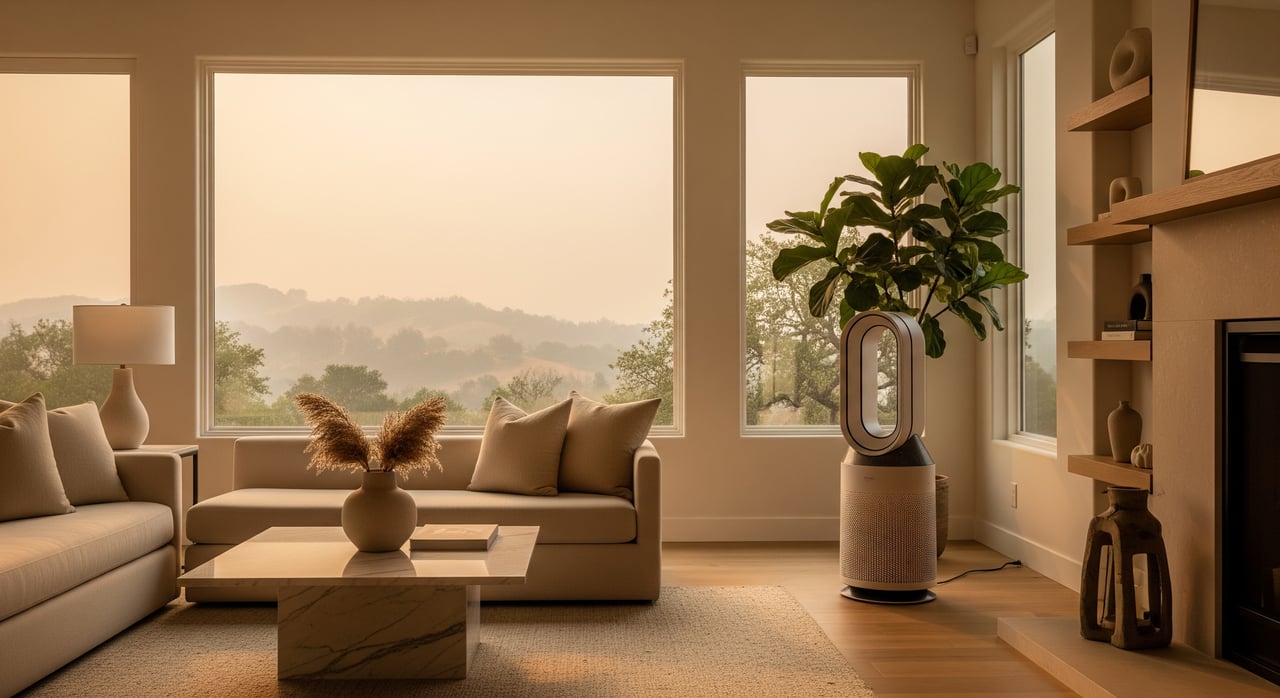
Choose one room where you can spend time comfortably during smoke events. Close windows and doors, seal gaps, and keep interior doors shut to limit infiltration. Run a correctly sized purifier in this room continuously on high. Learn how to set it up with the EPA’s step-by-step guide to a clean air room. Follow EPA’s clean room setup.
Use the right air filtration
Portable HEPA purifiers
A mechanical HEPA air cleaner with a CADR (Clean Air Delivery Rate) that matches your room size is one of the most effective tools. Run it on high in your clean air room. In California, check that any unit you buy appears on CARB’s certified list to avoid ozone-producing devices. Check CARB’s certified air cleaners.
Upgrade your HVAC filter
If you have central heat or AC, install the highest efficiency filter your system can handle. Many homes can use MERV-13 filters, but confirm compatibility to protect your equipment. Set the fan to On or Recirculate so air passes through the filter continuously. See EPA guidance on HVAC filters during smoke.
DIY Corsi-Rosenthal box
If store-bought purifiers are sold out or out of budget, a well-built box-fan plus MERV-13 filter unit can meaningfully reduce indoor particles. Use a newer, UL-listed fan, follow instructions carefully, and do not leave it running unattended if safety is a concern. EPA explains DIY filter options and safety.
Keep filters fresh
Smoke loads filters quickly. Plan to replace HVAC and portable purifier filters more often during heavy smoke events. Keep purifiers running as long as outdoor air is smoky. EPA details filter use and maintenance.
Cool your home without pulling smoke in
During smoky periods, keep windows and exterior doors closed. Set central AC or window units to recirculate, and close any fresh-air intake. Be cautious with single-hose portable AC units and evaporative coolers because they can bring in outside air. If it is too hot to stay home safely, consider a cooled, filtered public space. See Valley Air’s smoke readiness tips.
Cut indoor particle sources
Avoid activities that add fine particles indoors. Skip indoor smoking or vaping, frying and broiling, candles and incense, and sweeping or vacuuming unless you have a HEPA vacuum. Open kitchen or bathroom exhaust fans only briefly since they can draw in smoky air from outside. Review EPA’s wildfire indoor air tips.
If you need to go outside
When AQI is elevated and you must go out, a NIOSH-approved respirator like an N95 or P100 offers the best protection from fine particles. Cloth and surgical masks do not filter PM2.5 effectively. Fit and correct use matter. Read NIOSH guidance on respirators and smoke.
Quick Modesto checklist
- Monitor AQI in Modesto using RAAN and AirNow before opening windows or planning outdoor time. Start with AirNow’s wildfire guide.
- Pick one clean air room, seal leaks, and run a HEPA purifier sized for the room. Use EPA’s clean room guide.
- Upgrade your HVAC filter to the highest compatible efficiency (aim for MERV-13) and set the fan to On or Recirculate. EPA HVAC tips.
- Avoid indoor particle sources like frying, candles, and non-HEPA vacuuming. EPA indoor air tips.
- Prepare N95 respirators for necessary trips. NIOSH mask guidance.
Local tools and help for Modesto
- Real-time local alerts: Use the Valley Air RAAN dashboard or the Valley Air app for neighborhood-level readings and notifications. Check RAAN for Modesto.
- Clean Air Rooms program: Some local households may qualify for a free purifier through the San Joaquin Valley Air District. See the program details.
- County health guidance: Stanislaus County Health Services offers local AQI explainers and tips for residents with asthma or other sensitivities. Read Stanislaus County’s AQI overview.
Staying smoke-ready at home makes a real difference on those hazy valley days. If you are planning a move in Modesto or nearby communities and want a home that supports healthier indoor air and efficient cooling, let’s talk about options that fit your needs. Connect with Jennifer Bell for friendly, local guidance.
FAQs
What AQI level means I should start protecting indoor air in Modesto?
- Once AQI for PM2.5 reaches 101 or higher, sensitive groups should move to filtered indoor spaces, and everyone should limit outdoor activity as levels rise. Check AirNow’s AQI categories and RAAN for local readings.
Do window AC units bring in wildfire smoke?
- Many can if they are set to bring in outside air. During smoke, close any outdoor air intake and set systems to recirculate so air passes through filters instead of drawing smoke indoors. EPA’s smoke and cooling guidance.
Are DIY Corsi-Rosenthal box filters effective for smoke?
- Yes, when built correctly with a newer UL-listed fan and MERV-13 filters, these DIY units can reduce indoor PM2.5 and serve as a practical temporary option. Follow safety guidance. EPA’s clean room page covers DIY options.
How do I choose a portable air purifier for a bedroom?
- Pick a mechanical HEPA purifier sized for your room’s square footage and CADR, run it on high during smoke events, and replace filters as needed. In California, confirm it appears on CARB’s certified list.
Where can I get Modesto-specific smoke alerts and help?
- Use Valley Air’s RAAN for neighborhood alerts and explore the District’s Clean Air Rooms program for eligible households. For health messaging, see Stanislaus County Health Services.